
For products & solutions at the cutting edge
Our research and development (R&D) department is characterized by a broad spectrum of expertise. From the development of innovative manufacturing processes to the design and implementation of new, networked production systems, we cover all aspects of modern production. Continuous research is crucial for us in our production processes in order to be able to offer you products with excellent technological properties.
Another focus of our development work is the continuous improvement of efficiency and quality in our production processes. In order to keep our finger on the pulse and develop forward-looking solutions, we focus on current topics such as sustainable or modular production.
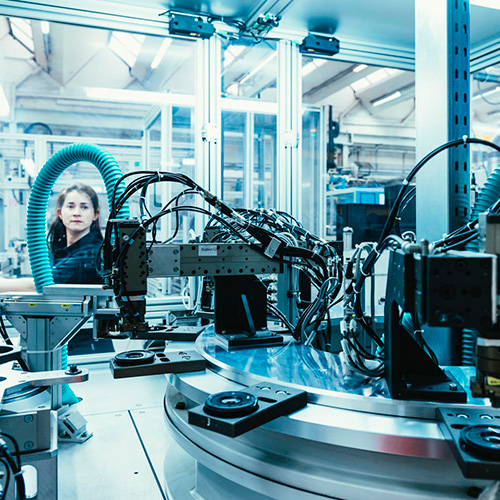
R&D Lab
The R&D Lab at KERN LIEBERS is a central component of our R&D strategy. The practical implementation of ideas in the lab is essential in order to expand our production expertise. The Technology Lab offers an ideal environment for implementing the entire spectrum from classic R&D projects and our innovation projects through to pre-series production.
This results in a close link between pre-production and process development. In this way, we achieve a good balance between market pull and technology push. In this way, we can quickly place new production technology impulses on the market and react more quickly to market feedback. This model also makes sense in terms of smooth and efficient ramp-up processes.

Cooperation & Open Innovation
Our development processes are based on the open innovation approach. This is why long-term partnerships are of great importance to us. Existing expertise with system and material suppliers helps to optimize our time-to-market.
Universities and research institutes are key to generating new innovation ideas and technology screening. They also provide access to state-of-the-art laboratories and technologies. This enables us to successfully transfer basic research into series production processes time and time again.
Association work is also an elementary part of our network. For example, we are actively involved in the Association of the German Spring Industry and the Research Association for Spatial Electronic Assemblies 3-D MID e.V.

The Next Generation of Joining Technology
How do you develop a manufacturing solution that welds connectors for electric motors today and a completely new generation of battery terminals tomorrow?
KERN LIEBERS answers this question with a modular machine concept for industrial joining technology. Instead of developing rigid, custom machines for individual applications, a scalable technology modular system was created. Tooling systems, clamping technology, process modules, automation, and component design are considered together and flexibly combined. This results in tailor-made manufacturing solutions for a wide variety of material combinations and product families. New applications can be industrialized more quickly, variants can be integrated efficiently, and development times can be significantly shortened. This approach goes far beyond the optimization of a single welding process: design, manufacturing, and function are developed as an integrated system. The result is a manufacturing concept that combines robustness, flexibility, and future-proofing.
The result: A single joining technology is transformed into a scalable manufacturing platform for electric mobility, energy systems, and demanding industrial applications.
→Go to the KERN LIEBERS Modular Joining Platform

From Digital Twin to Mass Production
Increasing demands for functionality, product variety, and cost-effectiveness call for new approaches to product and process development. KERN LIEBERS therefore relies on an end-to-end digital development process that virtually integrates materials, components, and manufacturing as early as the initial development phases.
At the heart of this approach is the simulation-based design of products and manufacturing processes. Based on physical material data, forming, joining, and manufacturing processes are digitally modeled, and their impact on the resulting component properties is predicted. This creates a digital twin that realistically describes the actual process chain and serves as the basis for well-informed development decisions.
Through the virtual evaluation of function, load-bearing capacity, and manufacturability, numerous iteration cycles, prototype parts, and tooling adjustments can be avoided. Development times are significantly reduced, while planning reliability for subsequent series production increases.
More Than Just Simulation
For KERN LIEBERS, simulation is not an end in itself. The digital twin combines material understanding, process knowledge, and product requirements into a scalable development standard. This enables data-driven decisions, systematically harnesses experiential knowledge, and accelerates the development of new products.
Your benefits:
· Faster product development
· Reduced prototype and tooling costs
· Early validation of production readiness
· Data-driven development decisions
· Scalable and reproducible development processes
· Greater competitiveness through digital innovations
With this approach, KERN LIEBERS lays the foundation for modern, efficient, and physics-based product development—from the initial idea to industrial-scale production
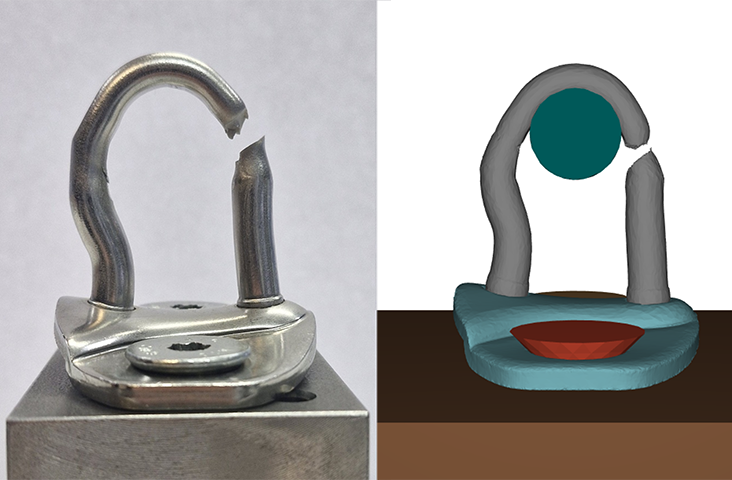
Reality and Simulation
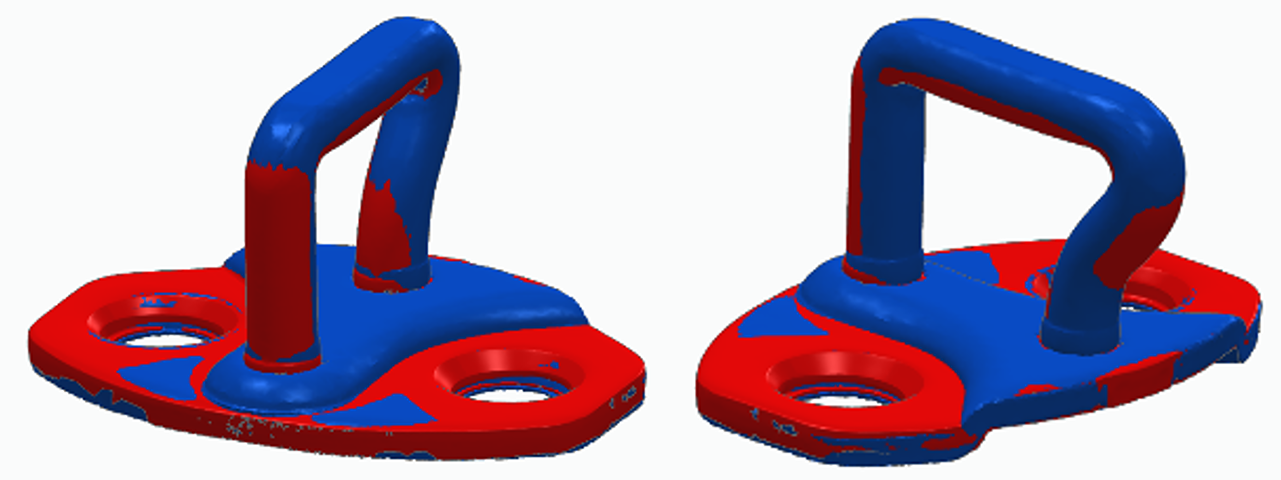
Simulation Comparison
In practice
Welding of non-ferrous metals
Based on our extensive expertise in the shaping and joining of steel components for mechanical applications, we have become a technology leader in the production of components for electromobility and electrification in various sectors. Focused R&D activities in areas such as stamping and bending, fineblanking and modern joining and surface processes are a key component here.
Additive manufacturing of springs
The 3D printing technology we have developed for spring materials delivers performance features that far exceed existing standards. Key benefits include faster production, as components can now be manufactured in days rather than months. Further benefits can be found in the flexibility and efficiency of the process, as no large order quantities with long delivery times of the primary material are required. In addition, digitalized and additive processes are revolutionizing the supply chain by streamlining production and reducing material waste.


How you benefit from KERN LIEBERS

Practical implementation of ideas in the Technology Lab

Diverse cooperation with universities & research institutions

Comprehensive association work
Questions? We will be happy to advise you!
Team KERN LIEBERS
- E-Mail: contact@kern-liebers.com